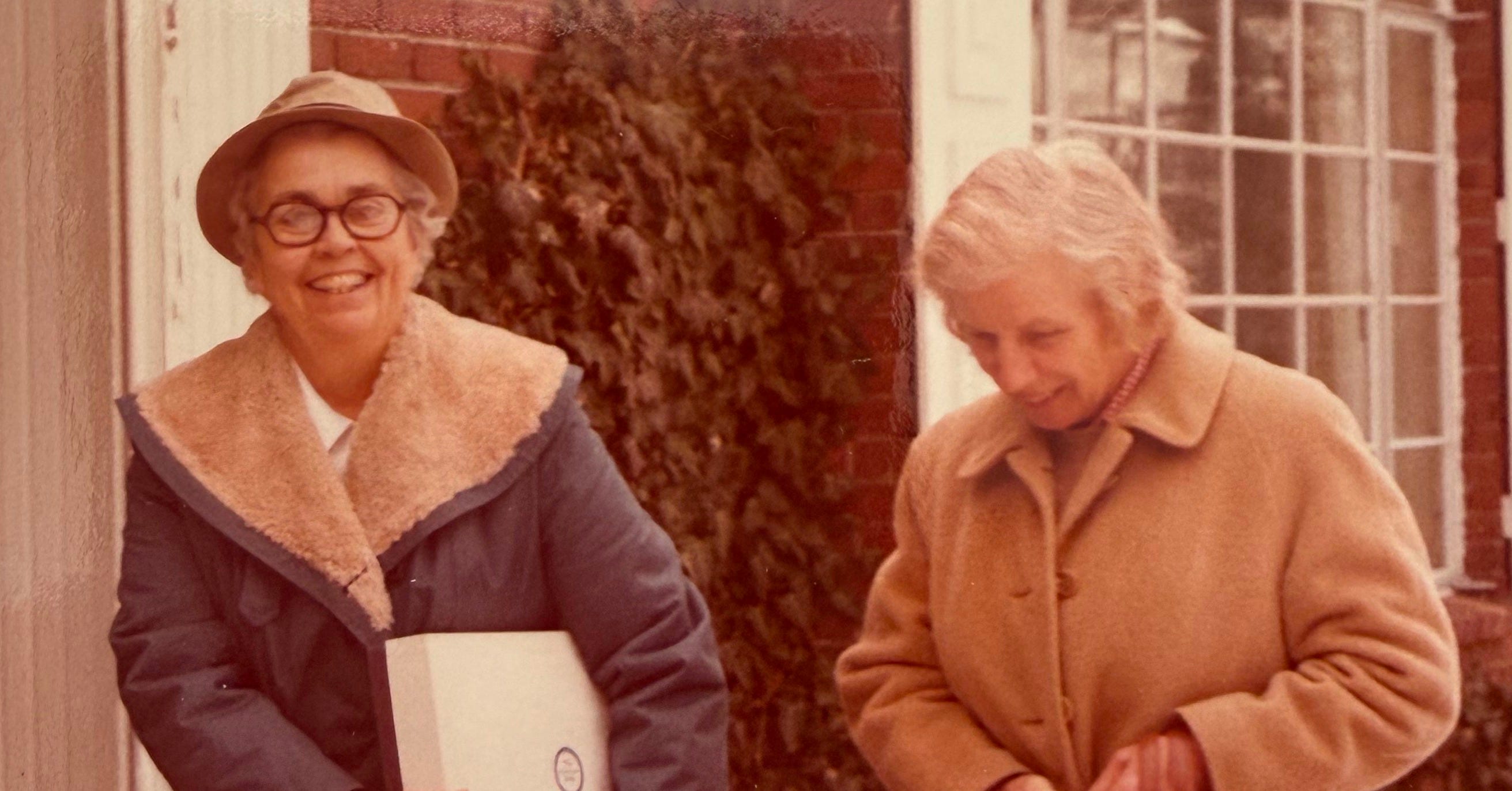
My grandmother was a faculty wife.
At Phillips Academy, when it was still an all-boys school with an all-male faculty, there was a whole community of women who held that title. Faculty wives. They had their own group. Their own role. Their own expectations.
My grandmother died when my grandfather was head of school. A few years later, he proposed to her cousin—a woman who was herself a high school principal in Virginia.
She left that job by Christmas.
The role of faculty wife was considered so critical, so necessary, that a professional woman with her own career abandoned it to fulfill it. In 1963.
I think about this often.
I think about my aunt, who later became the head of school’s wife at Milton Academy, her house expected to be open at all times, absorbing unpaid labor that no one questioned.
And I think about what’s happening now.
The boarding schools I know are struggling to retain mothers. The women either get divorced or they leave.
Why?
Because the system was built on labor that no longer exists.
When my grandfather was head of school, the men were free to teach and coach. The women kept the houses tidy, served as dorm mothers, handled childcare.
That labor was invisible. And it was free.
The work that faculty wives used to do still needs doing—except now there’s no one to do it for free.
Boarding schools are an extreme example. But they’re not the only institution that was built this way.
Law firms were built on the assumption that partners had wives at home managing everything else. So were hospitals. So were corporations with 7 AM meetings and 9 PM client dinners.
So were marriages.
The two-career couple is still navigating systems designed for a one-career household with a full-time support person. When both partners work, someone still has to manage the pediatrician and the permission slips and the thing that broke. That labor didn’t disappear. It just went underground—or onto one person’s plate.
Usually the mother’s.
This is what I call Family Admin—the invisible labor that runs a household.
I recently read a morning routine shared by a teacher in North Carolina—a mother of two young children whose husband is a firefighter working 24-hour shifts. Her alarm goes off at 4:00 AM. By the time students arrive at 7:15, she has already exercised, showered, switched the laundry she set on a timer the night before, packed lunches, woken both daughters, dropped one at a friend’s house for breakfast and one at daycare, and driven fifteen minutes to school.

Every minute is accounted for. Alarms for each transition. Coffee prepped the night before. Clothes picked out on Saturdays for the entire week.
This is what it looks like when there is no faculty wife.
This is the labor, made visible.
(By the way, follow Kelly Nolan. I have learned so much from her)
What I find striking about the faculty wife is that the role had a name. It was visible. Expected. Honored, even.
Now that labor is still expected. It’s just no longer named. And because it’s unnamed, it’s easier to pretend it doesn’t exist—or that the person struggling to do it all is simply failing to keep up.
Some things are shifting. Heads of school these days have spouses with their own careers—lawyers, psychiatrists, a governor even—professionals who are not expected to absorb as much institutional labor as my grandmothers and aunt were.
At the top, at least, the unofficial responsibilities are being deemed too much to demand.
But at the faculty and staff level? The old “triple threat” model of teacher-coach-dorm parent is crumbling. Some schools have moved away from it entirely. They charge $100,000 in tuition because they need to hire more staff. They can no longer rely on unpaid labor. If they want teachers who are experts in their craft, they have to let them focus on teaching.
This is why care teams aren’t optional—for institutions or for families.
What strikes me is how recent this all is.
My step-grandmother left her principal job sixty years ago to become a faculty wife. That’s not ancient history. The forces that made that seem like the right choice—the obvious choice—are the same forces institutions are up against today.
The faculty wife role had a name.
Tomorrow: what happens when we try to name everything else.
🕊️
SAM