

A few years ago, I led a workload equity project at my school.
It started because we noticed that some teachers had more student-facing time than others. Homeroom teachers versus specialists. People with supervision duties versus people without. The distribution felt uneven (under-the-breath comments in the staffroom about certain people having a “bajillion” preps), but we couldn’t prove it, because no one had ever documented it.
So we built a mega spreadsheet.
We broke down every task: minutes of instruction, minutes of preparation, minutes of supervision, minutes of coverage. We tried to make everything apples-to-apples.
What we discovered was that some people were indeed doing more than others. Some had accumulated duties no one noticed. Others were doing extra work without compensation.
We made changes. We assigned new responsibilities to some. We compensated others. We got to a place where, as the head of the division, I could look at the data and say: this is as fair as we can make it.
But not everybody wanted it to be fair.
Some people benefited from inequity.
We got pushback from people who had become comfortable with certain patterns, certain habits, certain arrangements that worked well for them.
Equity felt like loss.

This is familiar to anyone who has tried to rebalance work at home.
Eve Rodsky’s Fair Play card deck names every task required to run a household—not just meals, laundry, and dishes, but also: who makes the travel plans? Who tracks shared passwords? Who schedules the lessons and makes sure practice happens?
Just seeing it all written out feels like validation. The work is real. It’s not all in our heads.
Tamara Hinckley, who writes the Substack Half Moon Hustle, recently shared a Fair-Play-inspired "Great Accounting" spreadsheet. It lists every single task required to run a household with two young children. Daycare dropoff. Pump milk 4x daily. Wash, clean, and assemble bottles. Babyproofing. Birthday celebrations. Holiday cards. Estate planning.
Over 100 line items. Each one someone’s job.
It looked an awful lot like the spreadsheet I built at school.

Here’s what I hadn’t realized:
What families are doing to balance the load at home is exactly what institutions are doing to balance it at work.
The same resistance shows up, too.
In households, the person who benefits from the current arrangement may not want it to change. In institutions, the people who’ve had lighter loads may push back when loads get redistributed.
Any organization trying to retain mothers is doing exactly this work: documenting, assigning weight, redistributing. Dismantling systems that have relied on some people absorbing more than their share.
It’s hard work. It requires spreadsheets and conversations and discomfort.
But it’s the only way to see what’s really going on.
Tomorrow: childcare. When it mattered, we found a way.
🕊️
SAM
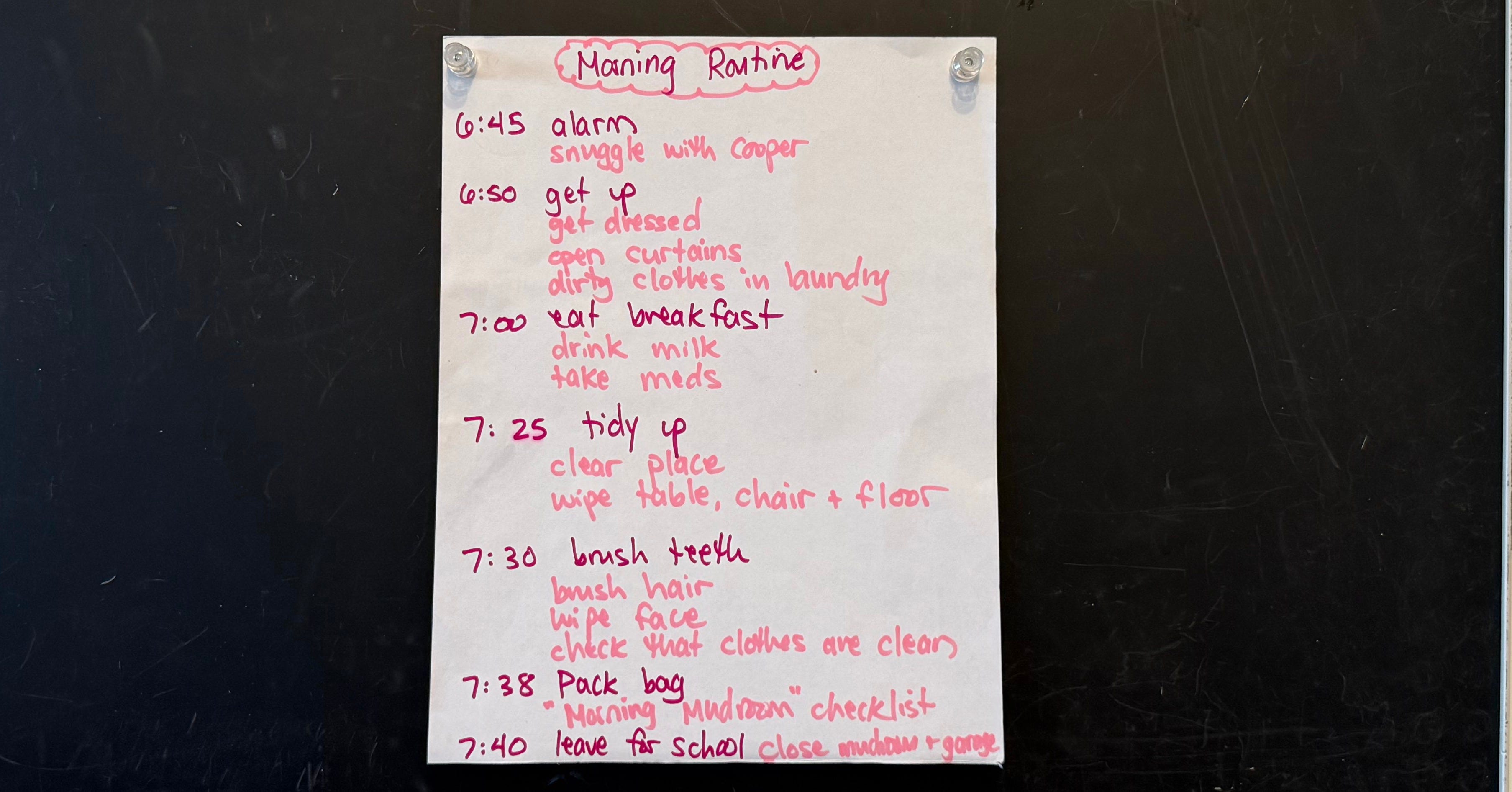
I’m going to experiment with ChatGPT to see if I can get a foundational list of work it takes to run a household with two kids. I feel like AI could save time on the admin work here and maybe, JUST MAYBE, ID some places that time spent can be redistributed and streamlined.