

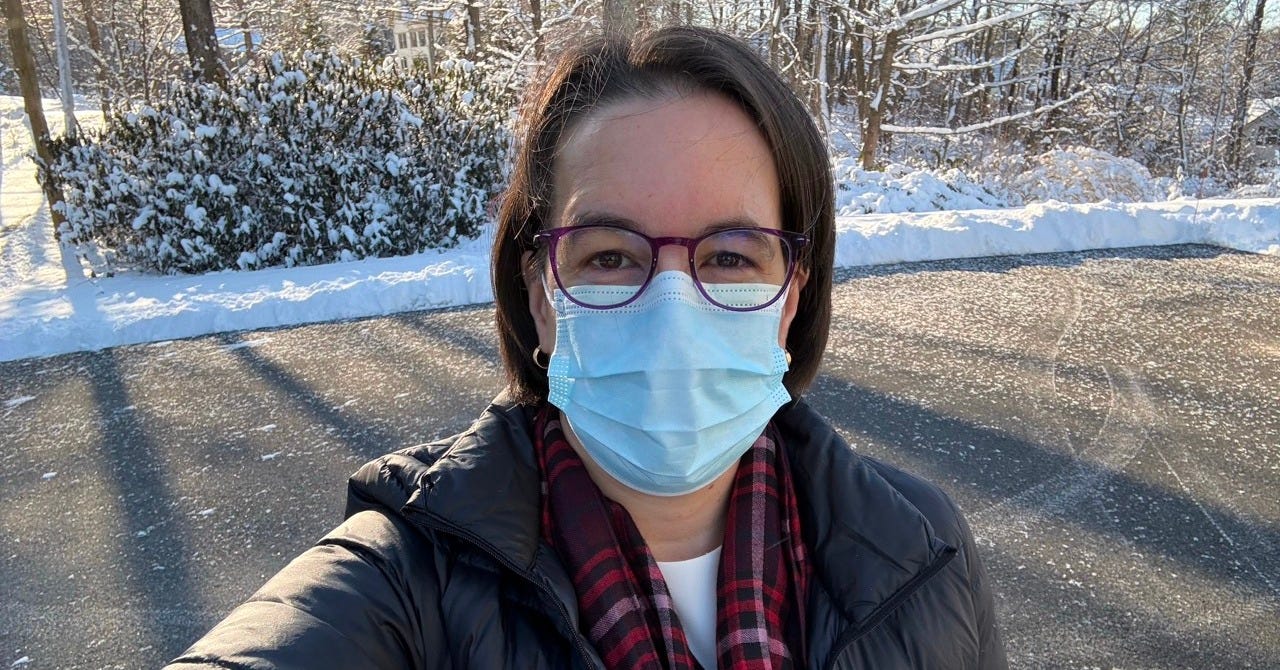
I went to the doctor for a blood test this morning. There was a container of masks by the check-in counter. Flu has been rough this year. I grabbed one and slipped it on without giving it much thought.
And then I felt something unexpected: comfort. A sense of familiarity that was almost cozy. I stood there for a moment, surprised by my own reaction. Everyone in my family knows I hate needles; the doctor’s office is usually the opposite of relaxing for me.
Why would the mask be comforting?
In my first year as a school leader, I inherited a community that was deeply dysregulated. They’d been through a lot of transition. People were watchful. Reactive. Looking for an anchor.
As a parent, I had learned about co-regulation—when your child is dysregulated, they can borrow your calm to help them settle. I brought that same approach to school leadership. I kept my door open. I walked the building. I projected steadiness.
It worked. At the end of that first year, people thanked me for stabilizing the community.
But being everyone’s emotional anchor was a full-time job.
Then COVID hit, and I was dysregulated, too. My kids were in crisis. I didn’t have enough calm to go around.
That’s when the mask became something different. Protection not just from getting sick, but from being seen.
It reminded me of how I sleep at night: eye mask, earplugs, cocooned against interruption. The face mask gave me that same sense of insulation during the day. A subtle signal to the outside world: for right now, I'm not available.
I had spent years managing my microfacial expressions. Every raised eyebrow. Every tight smile. Every flicker of concern that might communicate more than I intended. The mask was a relief. I could move through the building without worrying that my face was sending messages I didn’t have the energy to manage.
It provided insulation from people who were drawing steadiness from me when I had none left to spare.
People talk about masking, especially in neurodivergent communities: the exhausting work of putting on a metaphorical mask to fit in, to seem “normal,” to be acceptable.
So isn’t it funny that the physical mask does the opposite?
I used to work so hard to project calm, to look like the kind of person trustworthy enough to run a school, even when I wasn’t calm at all.
The physical mask freed me from that performance. It created a boundary I didn't have to explain.
When I put on that mask at the doctor’s office this morning, what I felt was permission. Permission to keep something for myself. Permission to be unavailable, even in public.
I don’t hate the mask.
I kind of love it, actually.
And I’m still learning what that means about how I want to show up in the world, about the tension between being available and being depleted, about what I get to keep for myself.
🕊️
SAM
So…given all, how did the shot go?😬
BRILLIANT. I borrow my husband's calm all the time. You hit the nail on the head. Love you!