

This morning, I went for a walk in my grandfather’s honor. It’s the anniversary of his death (lung cancer, 1971) and he died less than a mile from where I now live.
I’ve passed the front of his house a hundred times since we moved to Andover. It faces Phillips Academy, where he was head of school. It has a big round driveway. It’s appropriately imposing.
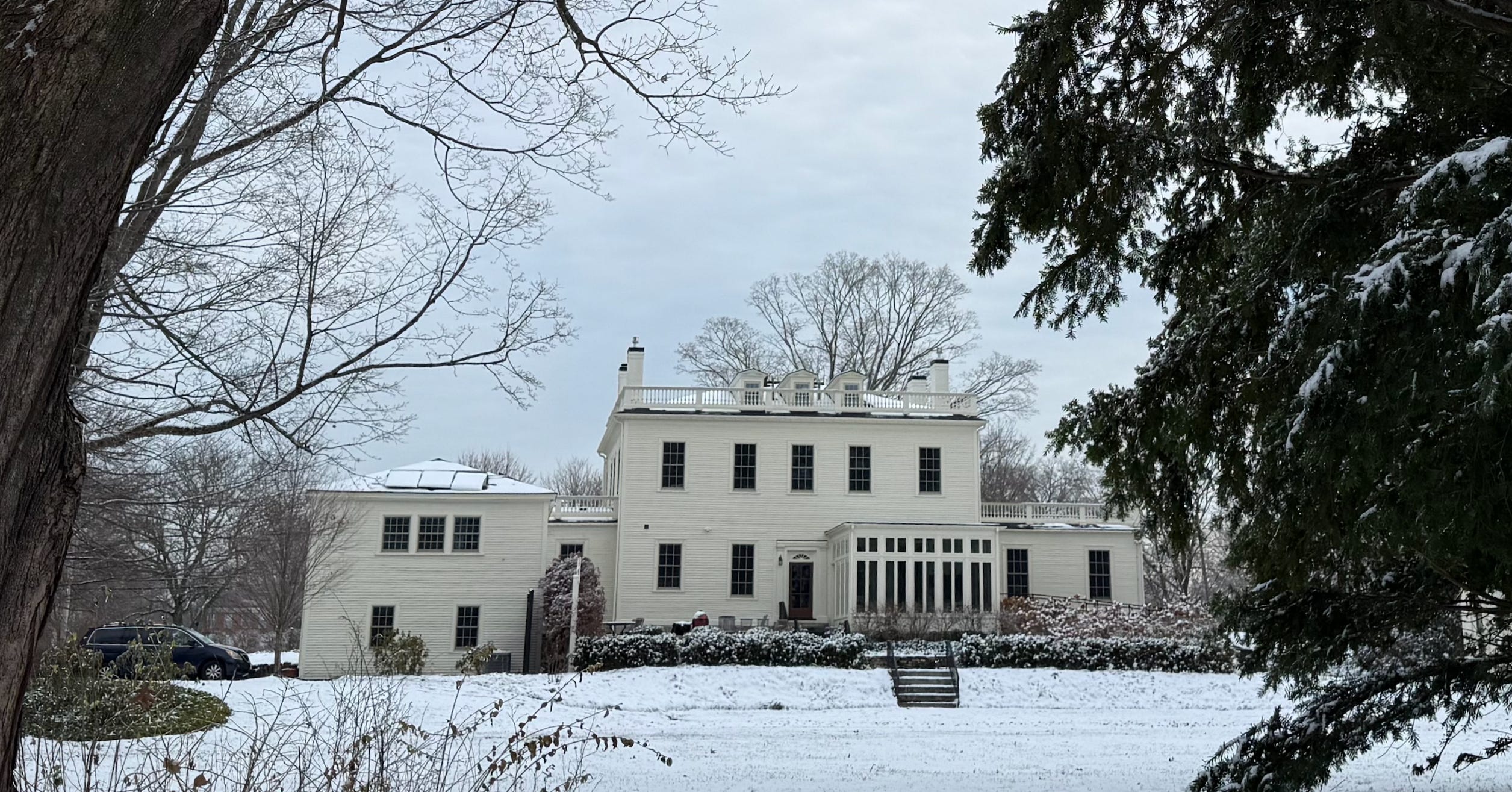
But today, something called me to go a different way, and I found myself in the back of the house for the first time.

Two weeks ago, at a networking event in Boston, I mentioned my grandfather’s name to someone from the school. She stopped. Looked at me differently.
“John Kemper was a great man,” she said.
I was taken aback. He died in 1971. She couldn’t have known him. I asked how she knew.
“He founded A Better Chance of Andover,” she said. “An organization I’m deeply connected to.”
She said it again: “He was a great man. A great leader.”
I never met my grandfather. I’ve only seen him in pictures, including on the cover of Time. And yet his legacy lives on—in my bones, in the lessons I’ve heard from those who knew him.
This is what the world sees of him. The front of the house. The legacy. The accomplishments.

Yesterday, I met with a coaching client who’s studying the leaders she admires. She’s taking notes, looking for patterns, trying to understand what makes them effective.
As we talked, it became clear: the things she notices are all front-of-house.
She sees what the world sees: the authority, the decisiveness, the way they command a room. The way people saw my grandfather.
But what we feel when we are leaders is the back of the house.
We feel our vulnerabilities. The areas we’re still growing, still questioning, still imperfect. The private spaces where we wonder if we’re enough.
Standing behind my grandfather’s house this morning, I saw what I’d never seen before.
A lovely sunroom. A big, open backyard facing west. Quiet. Tree-lined. Protected.
All of a sudden, I felt like I was meeting a whole other side of him.
Since we moved here, I’ve been spending time in the Phillips Academy archive, getting to know my grandfather through his writing. He had a daughter with bipolar disorder. His wife died when he had three teenage children. He grew up without much money. I think he always felt a little bit like he wasn’t enough.
And yet what people remember—what that woman at the networking event remembered—is: “He was a great man. A great leader.”

As a leader, I have learned to look for the back of the house in the people I admire. Otherwise, their front-of-house feels unattainable, and I feel like I can’t measure up.
I start to wonder if I can even claim to be a leader at all.
I have also learned (am still learning!) to look for my own front of house, the strengths that others see that I am blind to.
Because, of course, the house is the house.
Everybody’s human.

When you look at leaders you admire, remember: you’re seeing their front of house. Look for the back. Listen for the doubts and the stories that reveal the whole person. That’s where wisdom lives.
And when you look at yourself, remember: you’re standing inside your own back of house. You see the vulnerabilities first. Others don’t. What might you look like from the street?
Study the full house in others.
Let yourself be a full house, too.
🕊️
SAM
"And when you look at yourself, remember: you’re standing inside your own back of house. You see the vulnerabilities first. Others don’t. What might you look like from the street?" Wow. So true!
This is very profound. Thank you for sharing this <3