

Recently, a client was describing creativity as something separate from her job. Something reserved for personal time.
I recognized the assumption. I had made it too.
“What does creation look like for you at work?”
When I was a Lower School Head, creation looked like duty rosters and class schedules. Faculty meetings. Weekly newsletters to families.
I was building a world.
Every schedule reflected a value. Every meeting structure embodied a belief about how adults should treat one another, how we should speak with and about children.
“Oh,” she said. “I create PowerPoints. I facilitate gatherings. My role in the company is to be the connector. My colleague joked that I’m the Chief Listening Officer. I guess I’m creating community.”
Yes.
Creation does not only happen on weekends. It is not limited to canvases or kitchens. It lives in spreadsheets and agendas, and the way you arrange chairs in a room.
As an educator and a parent, I am in the business of hope. My life’s work has been investing in little people who, I hope, will grow into big people who shape the world with integrity. Coaching mothers is work I believe in just as deeply. And every batch of chili crisp I make and share is imbued with a wish that it will brighten someone’s day.
When I think about hope, especially right now, I often re-read Rubem Alves:
“What is hope?” he writes in Tomorrow’s Child:
It is the presentiment that imagination is more real and reality less real than it looks. It is the hunch that the overwhelming brutality of facts that oppress and repress is not the last word.
Creation is not without suffering. In fact, suffering is inextricably intertwined with hope:
Suffering is the thorn that makes it impossible for us to forget that there is a political task still unfinished—still to be accomplished. And hope is the star that tells the direction to follow. The two, suffering and hope, live from each other. Suffering without hope produces resentment and despair. Hope without suffering creates illusions...
Creation sits at the intersection of hope and suffering.
We create because something is not yet right.
We create because we believe something better is possible.
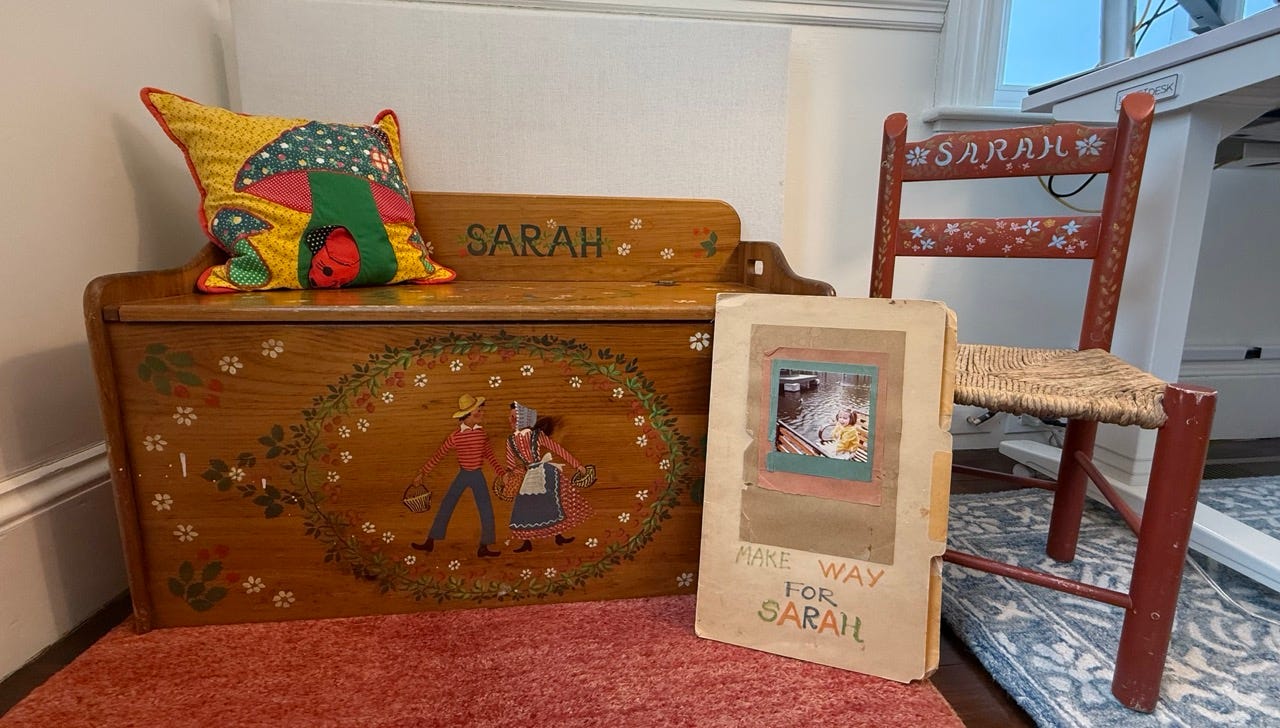
In my office, I keep three objects from my grandmother: a child’s chair and a toy box with my name painted on them, and a handmade book about a trip to Boston Public Garden.
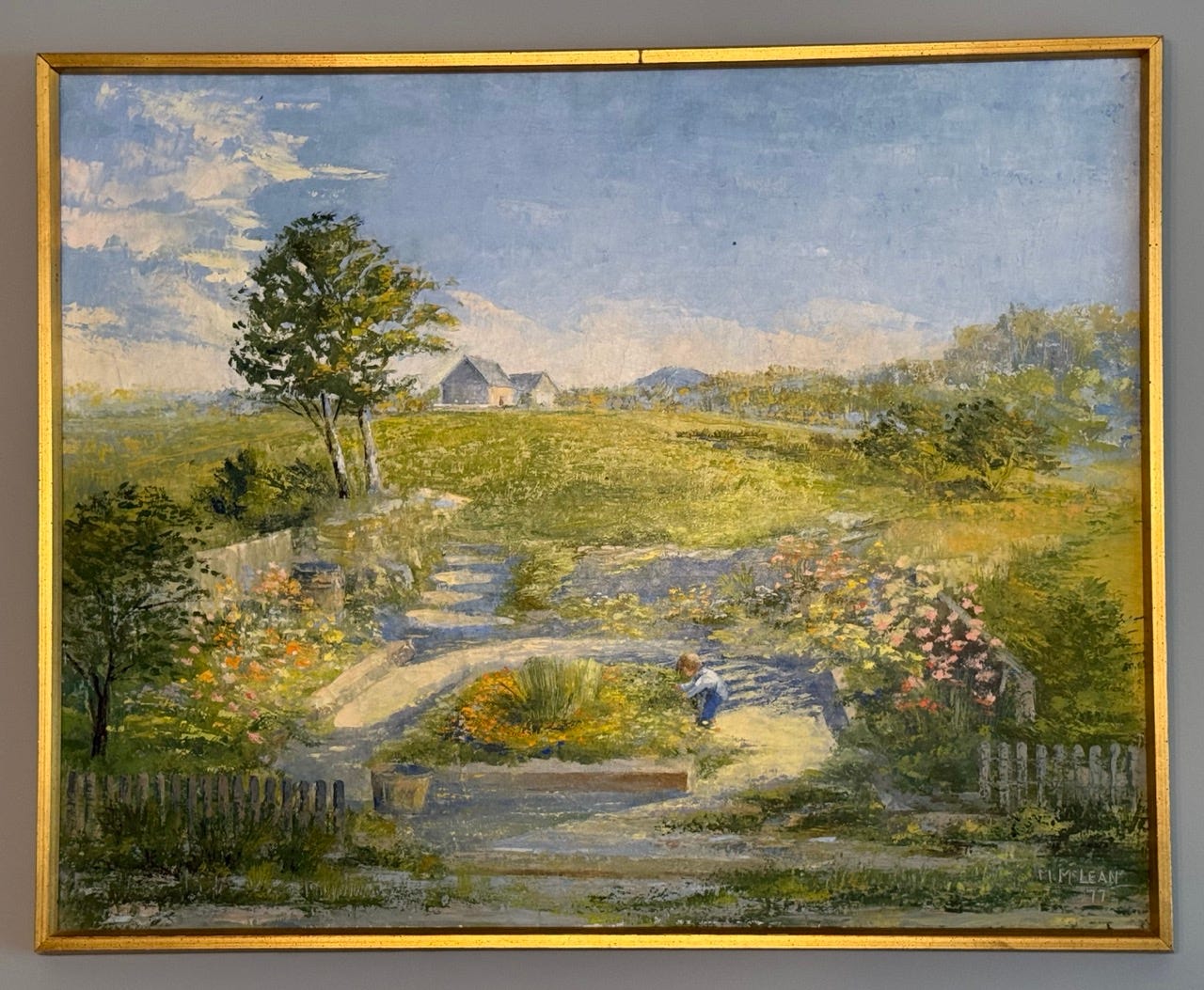
In my dining room hangs a portrait of two-year-old me picking strawberries.
They are hope, made tangible.
My grandmother died when I was twelve. When I look at little me sitting on the swan boat or stooped over in her garden, I remember that I was a child once, too, and I was treasured.
I feel the same way when I am in the Phillips Academy archives. I immerse myself in the investments made by previous school leaders, more than 50 years ago — the hope that incubated programs like Outward Bound USA and A Better Chance, and shaped the lives of generations of students.
Those leaders couldn’t possibly imagine what has been built on the foundations they laid.


Again, Alves:
Let us plant dates, even though those who plant them will never eat them. We must live by the love of what we will never see.
When I look at that small chair, I remember that someone invested in me through acts of making. When I read through my grandparents’ papers, I am touched by their commitment to a future well beyond their own children and grandchildren. Their creation strengthens my hope.
Now it is my turn.
And yours.
What are you making? What hope does it carry?
🕊️
SAM
Beautiful, uplifting, reinvigorating and inspiring. Thank you. Just what we need to hear.
This is SO timely. I'm contributing to a grant proposal today that is centered on creating new pathways towards hope and optimism for young people, and I appreciated your visualizations and thoughts, SAM - as inspiration. #samevibes today