

April 4 is Tomb Sweeping Day in Taiwan — a national holiday for tending your ancestors’ burial places. What better day to finally use my grave-cleaning shelf.
It’s in the garage. It holds several rinsed-out milk jugs for carrying water and a dish brush I intercepted on its way to the trash. A bottle of detergent, leftover from power washing the back patio. I’ve been building this collection since November, waiting for the weather to warm up.

I started at Christ Church, where my mother’s ancestors are buried. I didn’t know they were there until we’d lived in Andover for about a year. It turns out it’s also the church where I was baptized.
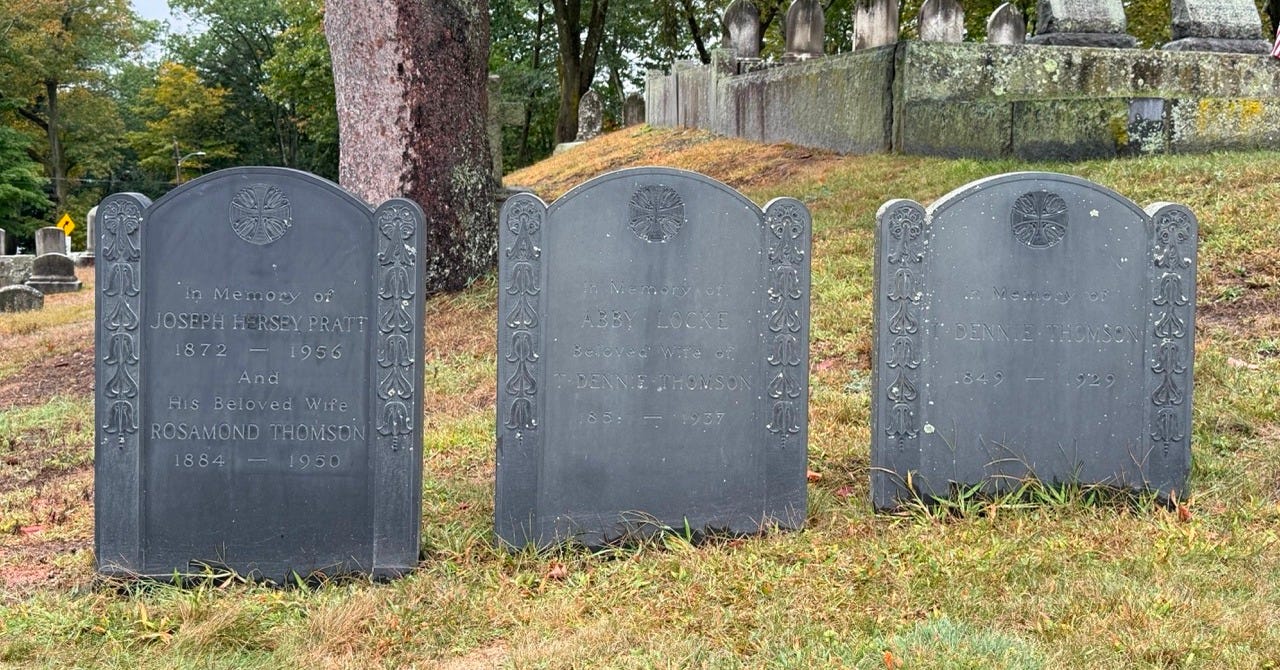
Their names go back to the 1850s. Some of our original ancestors who came here, and their children, and their children’s children, including two of my own much-loved great-aunts.
They had mostly existed as abstractions to me. Sepia faces in olden-day clothes.
To see their names carved in stone was something else entirely.
I started scrubbing. The moss had settled deep — not just on the surface but into it, little tendrils gripping the stone. Even if I scraped the top layer off, I could tell it would grow back.
I did my best. Got them looking better than they did.


Then I drove to my grandparents’ cemetery and set to work on the bittersweet.
I’ve written before about bittersweet — how I spent last fall ripping it from our yard, how I couldn’t stop once I started seeing it. When my dad and my aunt read that post, they both said the same thing: The bittersweet! That was the bane of your grandmother’s existence — it kept choking the laurel by your grandfather’s grave.
My dad added: Be careful of the poison ivy. Mom got a nasty case from fighting the bittersweet in the cemetery.
So here I was. Clippers, gloves, two lawn-and-leaf bags. Continuing my grandmother’s fight.
The roots were like ropes. They weren’t just around the laurel — as I pulled, they extended right up to the edge of my grandparents’ gravestones. I dug and pulled and pulled and dug. At one point, I unearthed a root mass that looked like something from the ocean — a cloud of capillaries branching out underground, quietly, invisibly, in every direction.


I filled two bags. My arms were scratched raw.


As I dug, I kept thinking: What am I really doing here?
Not the literal answer. Tending graves. Saying thank you.
But something about the work — being on my knees, pulling things out by the roots, deciding what stays and what goes — felt like more than yard work.
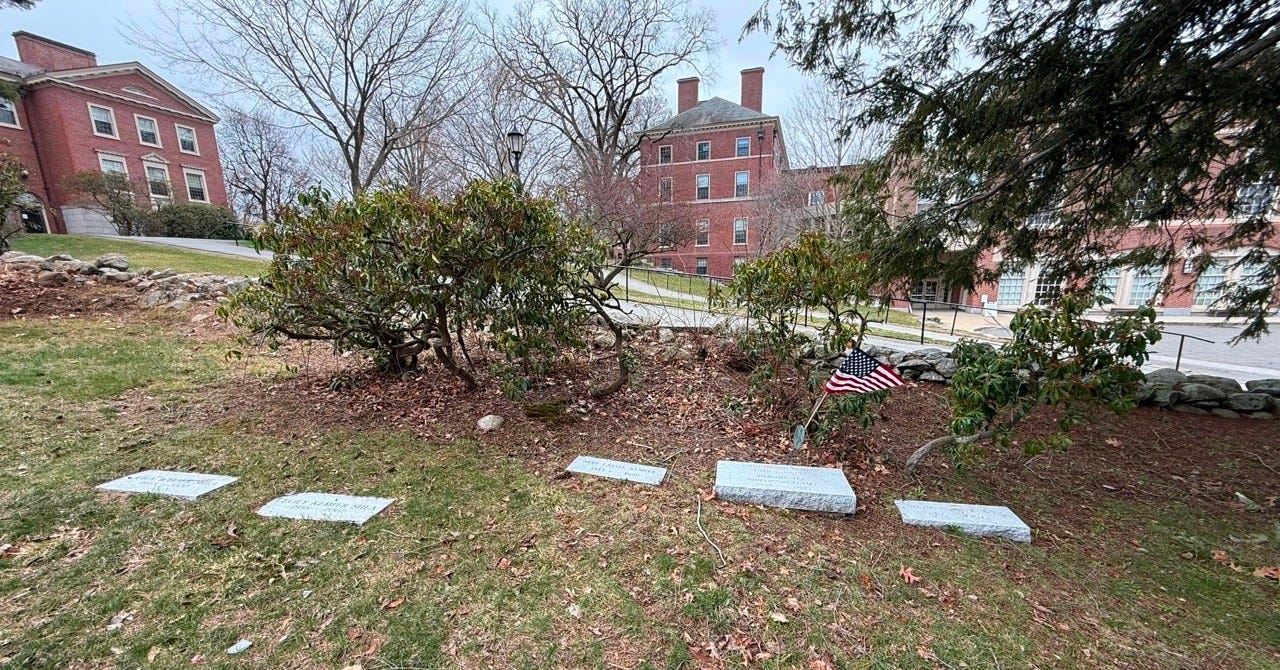
The older I get, the more I long to understand these ancestors as humans. I am getting closer to the age they were when I knew some of them. My grandmother was just a year older than me when she died. And I can see now that they had human achievements, yes — but also human struggles. They negotiated relationships with their children and their own parents. They made decisions and sacrifices.
I’m trying to access their struggle.
Not just the laurel they planted, but the bittersweet they fought. Not just the clean face of the stone, but the moss that kept growing back.
I hauled the two bags of bittersweet, shovel, clippers, gloves, detergent, scrub brushes, and empty milk jugs back to the car. My scratched-up arms told a story in themselves.
I’ll be back again soon.
🕊️
SAM
Your journey is radiating out like the roots of the bittersweet, only instead of dominating and choking, you are liberating, both inside yourself and in others. If those cleaned graves are a concrete example, what a difference in your having traveled through!
When we were kids, your great granny would pick us up at the Hemlocks and take us to her little sister Mable's grave in Stanstead. "Sadly," Granny would say, "Little Mable died at age 3."
We'd scrub the grave and then go out to lunch at Kelly's. I'm sure all of us cousins still have a place in our hearts for Little Mable!"