Ted Sizer has loomed large in my family’s lore for as long as I can remember.
He followed my mother’s father as head of school at Phillips Academy. My father’s father was the board chair who hired him. I grew up hearing Ted’s name, absorbing his ideas secondhand. It wasn’t until I got older that I understood the full scope of what he and his wife Nancy had built — a body of work that influenced education around the world.
One phrase stuck with me: the children are watching.
It is based on the title of one of Ted and Nancy’s books, but I absorbed the idea long before I read it. Children do not learn from our lectures. They learn from what we do. They are always taking notes.
As the oldest child in my family, I watched my mother carefully. When in doubt, even now, I find myself doing what she did. She was my first example.
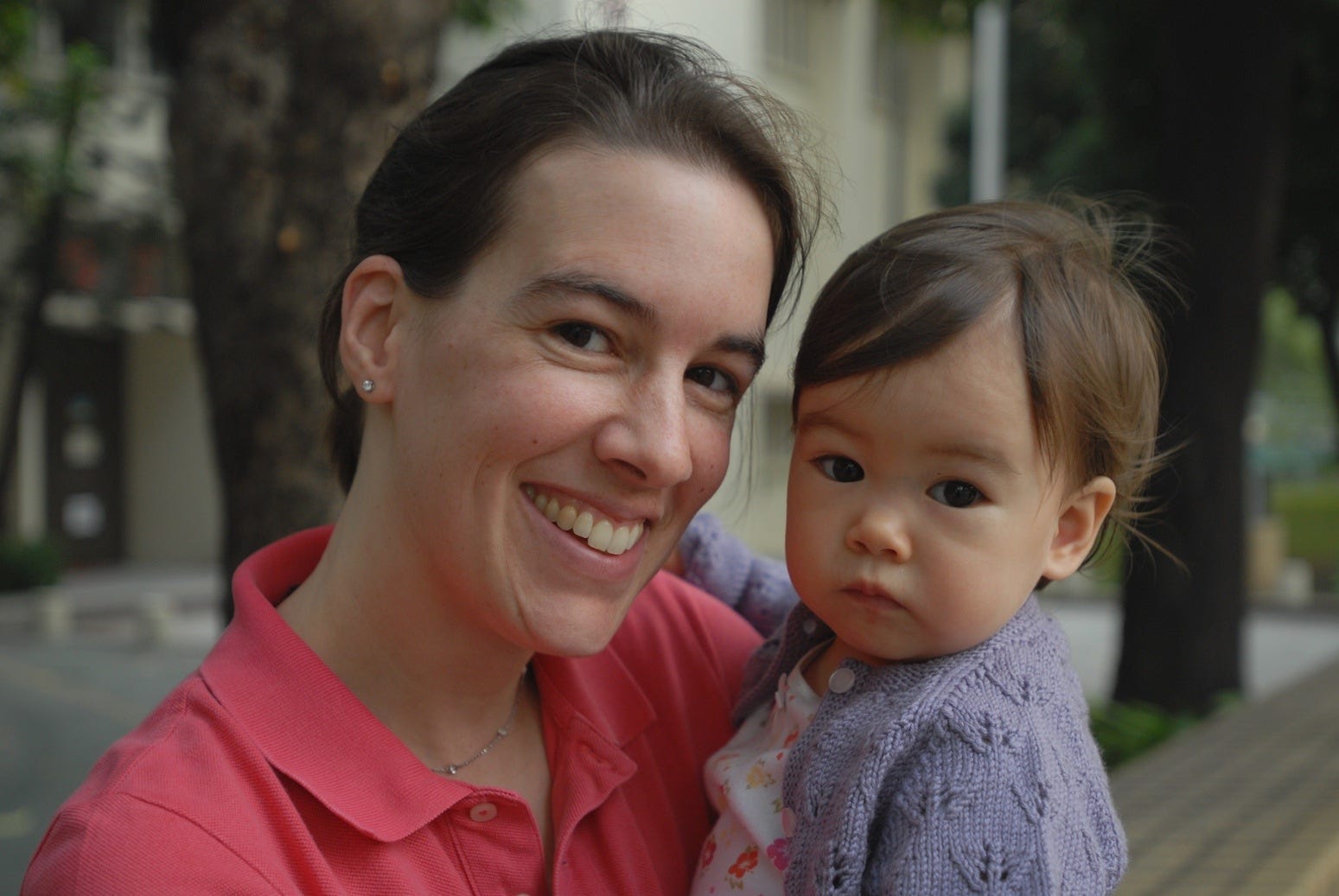
So when I became a mother, especially to a daughter, I knew she was watching me.
For years, that daughter insisted that she did not want children.
Then one day, she came home and said, out of the blue, “I’ve been thinking. Maybe I do want kids. But I can’t do it the way you do it. I can’t be a mom like you. You’re so patient. I’m not like that.”
Her words took my breath away.
Without meaning to, I had made motherhood look unattainable.
I thought that because she was watching me, I had to be perfect. Show her it was possible to balance parenting and other passions. I thought I was modeling competence. Patience.
Instead, I was modeling something that felt impossible to replicate.
Her words transported me back years, to a different office, a different conversation.
“I can’t do it like you do it,” I had told my mentor, Tonya Porter, through tears.
She worked constantly. Saturday mornings in her office. Evening emails. Endless availability. I had absorbed her example and concluded that if I could not do it exactly as she did, I could not do it at all.
My daughter had done the same math.
If I can’t do it like you, maybe I can’t do it.

I’ve spent a lot of my adult life battling perfectionism, and I keep encountering it in new disguises. This is one of its most insidious: the belief that a good example has to be a polished one.
But my daughter didn’t need a polished example. She needed to see me drop some balls. Lose my temper. She needed to know that the chaos and the stumbling are part of it — not evidence that you’re doing it wrong, but evidence that you’re doing it.

In coaching sessions, when a mother in leadership is up against a situation that feels impossible, I’ll sometimes ask:
What would you want your daughter to do in this situation?
It cuts right through.
Because almost always, what we want for our daughters is not perfection. It’s courage. Honesty. Self-compassion. The willingness to ask for help.
How about we model that?
For their sake. And also for our own.
The children are watching.
🕊️
SAM