

When an email went out asking for families to host the science lab’s two leopard geckos over spring break, I hit reply.
I was both the principal and a second-grade parent. Which meant genuine enthusiasm, paired with a quiet sense that I should probably model good community participation.
The geckos were adorable. Gummy and Houdini. Cute faces. Spotted tails. Plus, reptiles shed their skin. Great science lesson. No long-term pet.
Then I learned about the crickets.
And the mealworms.
Apparently, everyone eats someone.
I almost gagged.
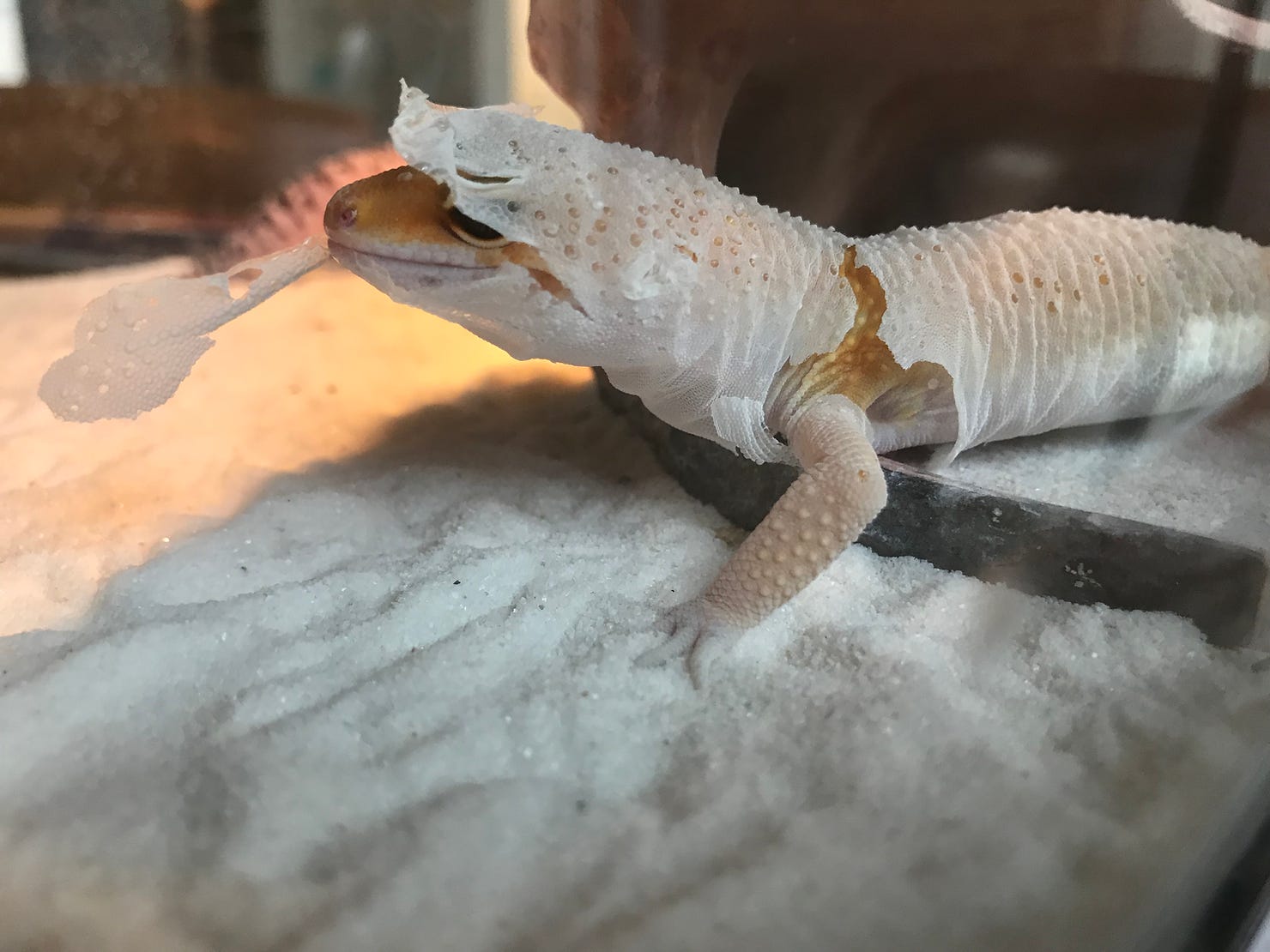
A few days in, I noticed one of the geckos rubbing against its rock. Its skin looked pale. Almost transparent.
It was shedding.
I called the kids over. I imagined preserving the shed skin on a bookshelf. Evidence of a wholesome, nature-informed childhood.
The gecko wriggled. Cracks appeared. The old skin separated from the brighter layer underneath.
Just as the kids were starting to lose interest, Gummy suddenly turned to look at us, opened its mouth wide, and stuck its tongue out.
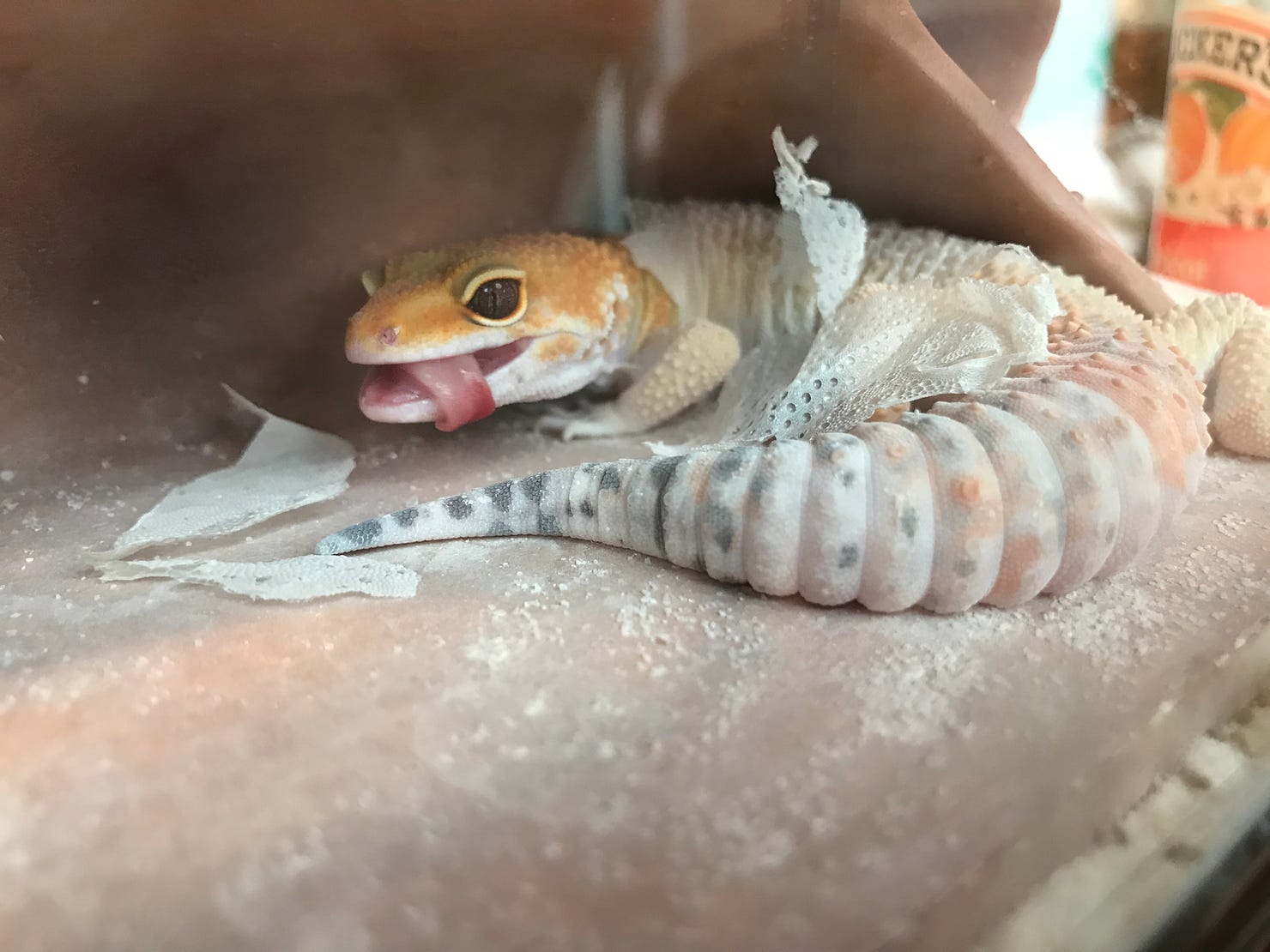
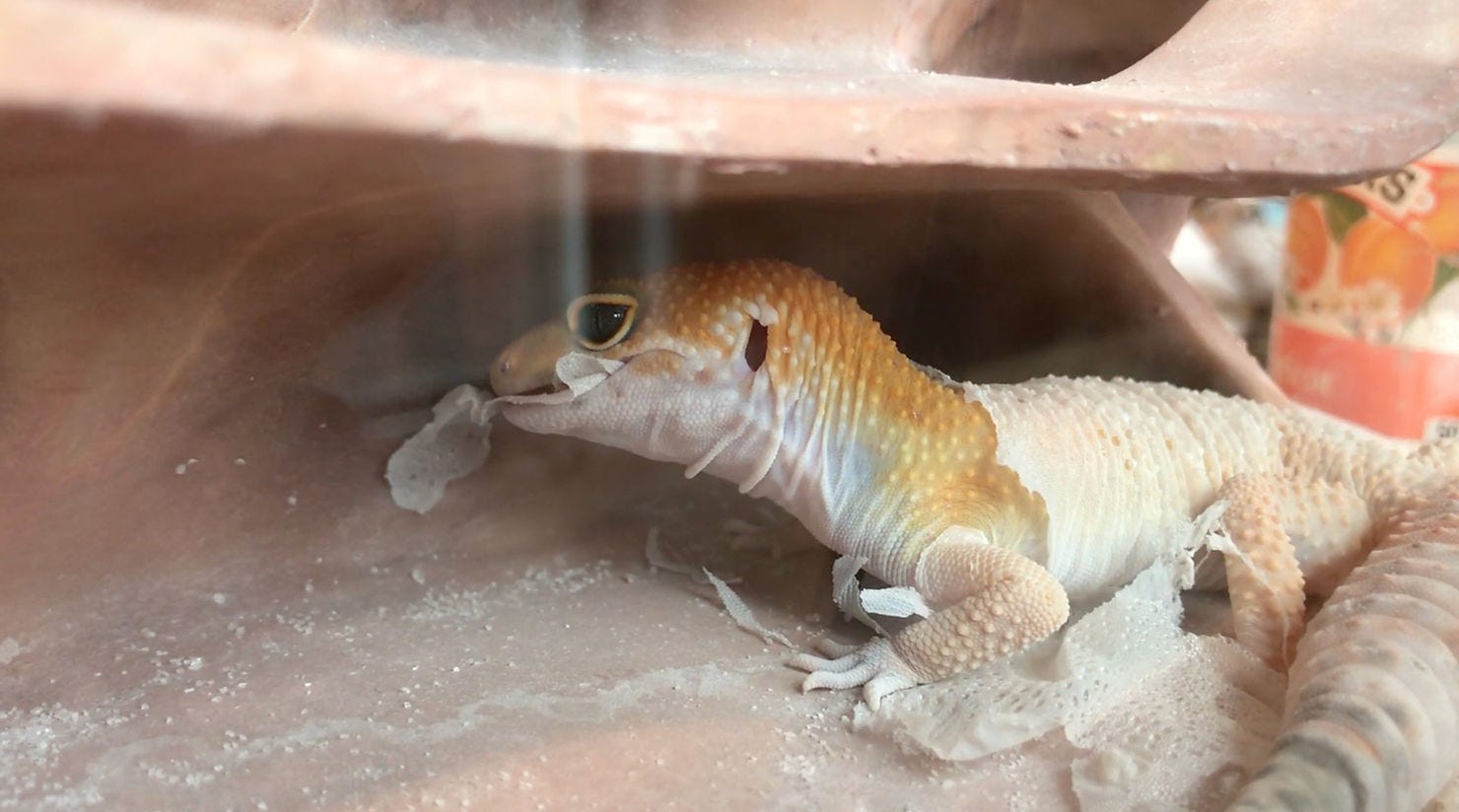
And before I knew it, that mouth had grabbed a huge hunk of dry, dead skin and folded it in.
I stared.
It was eating its face skin.
I gagged for real.
“Wait, what?? Are they supposed to do that?” I asked my second-grader, who was now staring with rapt attention.
“Yes, Mom!” He said with some impatience. “Shedding takes a lot of effort. Eating the skin is how they power up. Look! Now it’s eating the neck!”
Hopes of gecko skin on the bookshelf, dashed.
When we came back the next morning, the habitat was clean. No evidence at all that anything had happened. Such a major transformation, and it was as if nothing had changed.
If we hadn’t been there to see it, we might have thought nothing much had happened at all. We wouldn’t have known about the scraping and rubbing. The shedding and the eating.
This is the thing about transitions: they’re often invisible unless you’re watching very closely.
Most of us don’t advertise our adversities. We don’t send out a memo when we’re in the space between who we were and who we’re becoming. Transitions are solitary affairs. We scrape and rub and shed in private.
Then we emerge, and people think: wow, she looks great.
If we haven’t seen examples of the messy middle, we can think we’re doing it wrong when we find ourselves there. That all this scraping means we’re failing. That the discomfort is a sign we should stop.
Here’s what stands out to me about the leopard gecko: it didn’t just shed its skin and move on. It consumed what it had outgrown. It transformed that dry, dead layer, the one that had become too tight, into fuel for what came next.
Nothing was wasted.
We don’t just shed and start over. We metabolize. We transform. We use what we’ve learned, even the uncomfortable outgrown parts, to power the next phase.
It’s not elegant. There’s no pristine skin to preserve on a bookshelf. No artifact to point to and say, look, here’s what I released.
Instead, there’s just you on the other side. Brighter. Stronger. More yourself than before.
Even if you had to eat your face to get there.
🕊️
SAM
Love this imagery! And also ew :)